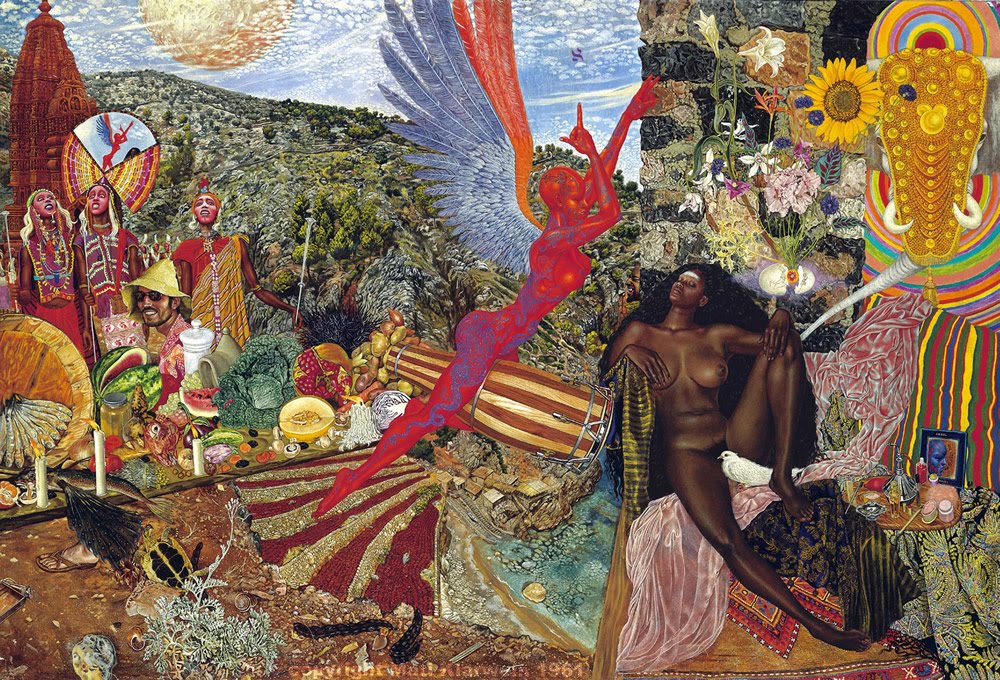
Divine Guardians
The pagan Romans believed that each person had a divine spirit that acted as a guardian
angel. A genius was a man's numen and a juno was the numen of a woman. Thus, the genius
of a ruler would be honored. Earlier Roman rulers were priest-kings associated with the rites
of the oak which became archaic long before Rome subjected Italy as a whole to her rule.
Roman society venerated ancestors, and people left offerings to them to procure their
blessings and avoid being haunted. In many ways the Roman concept of the Di Manes, or
spirits of the dead, is similar to traditional African beliefs; animism and ancestor worship play
a part in both cultures' home and community observances. The parentalia was a festival held
across Europe in February that honored the dead. In the Middle Ages, February was a time
connected to the Wild Hunt of Phantoms led either by maternal figures or by Herne or Woden.
It is not unreasonable to speculate a continuation of the above-mentioned phenomenon from
pagan religions to hybrid folk tradition. The Fata, or Fates, became synthesized with the
Teuto-Celtic Triple Mothers and their association with the dead and faeries became important
to people of the later Middle Ages as the concept of the White Ladies in vernacular practice
became established. This was an unconscious assimilation of many fragmented elements over
a thousand-year period, from the 4th to the 15th centuries. It is here that the landscape of
the physical world blends into the dreamscape of the Witch's Sabbat.

Subscribe to:
Post Comments (Atom)

No comments:
Post a Comment
Note: Only a member of this blog may post a comment.